
The Cat Wants to Eat. Something Makes It Stop.
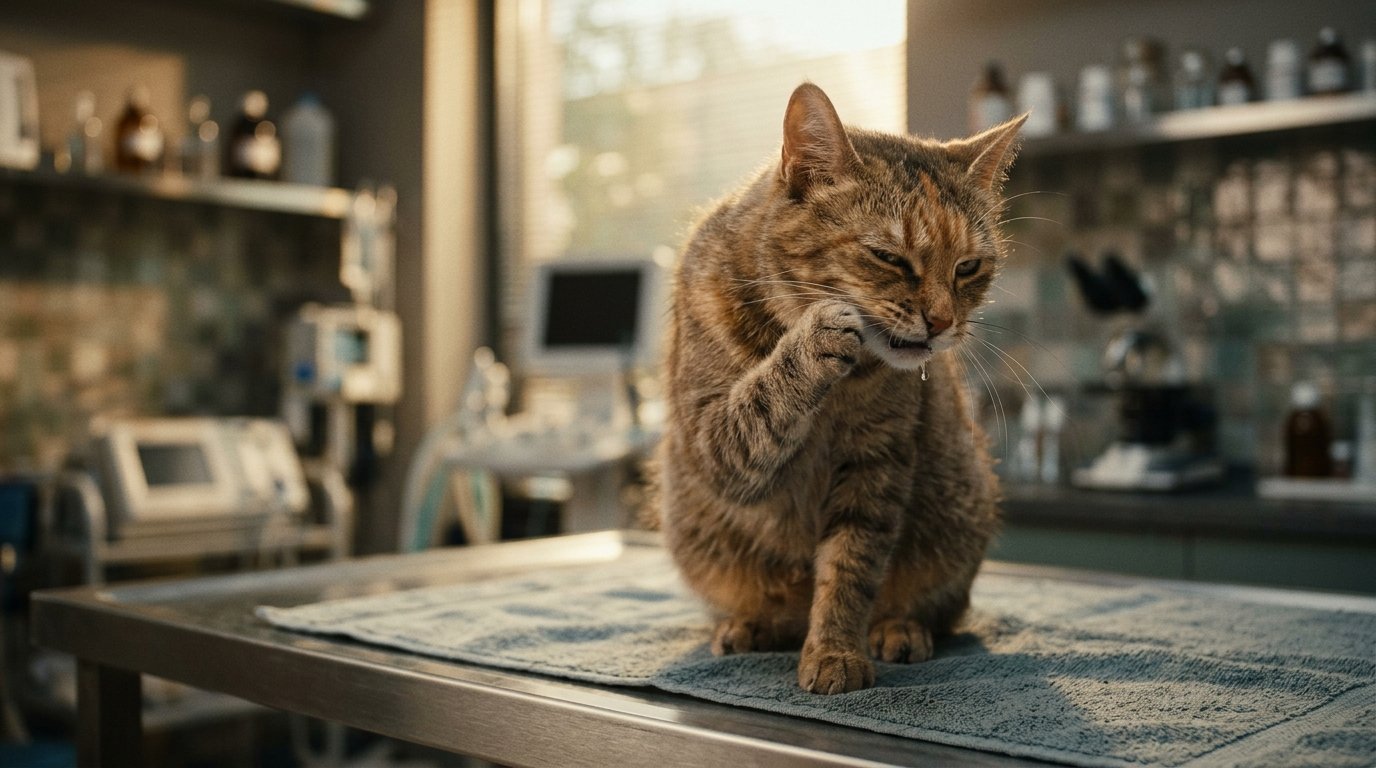
Feline orofacial pain syndrome: when the severity of oral pain raises questions beyond the teeth.
The cat approaches its food willingly. It takes a few bites, then abruptly stops.
There is a sudden movement of the jaw. Repeated licking, perhaps an exaggerated chewing motion. The cat begins pawing at one side of its mouth, sometimes with enough force to injure the tongue or surrounding tissues.
Minutes later, the episode may have passed. Between episodes, the cat can appear entirely comfortable.
For the owner, it looks as though something is caught between the teeth.
For us, the timing and character of these episodes raise a more complicated clinical question: does the condition of the mouth adequately explain the intensity of the pain?
When the examination and the behaviour tell different stories
Dental pain remains one of the first considerations in a cat that suddenly interrupts eating.
Tooth resorption, periodontal disease, fractured teeth and oral inflammation can all produce substantial discomfort. Some lesions are not apparent during a conscious examination and require dental radiographs for proper assessment.
Yet occasionally, the pattern of pain appears disproportionate to the findings.
The cat may experience abrupt, intense episodes of oral discomfort, frequently affecting one side, with exaggerated licking, chewing or pawing movements. Eating, drinking and grooming may precipitate the behaviour.
This particular presentation raises suspicion for feline orofacial pain syndrome (FOPS), a disorder thought to involve abnormal processing of sensory information carried by the trigeminal nerve.
The distinction is important. Dental disease and FOPS are not mutually exclusive. Oral pathology may trigger or exacerbate episodes in a susceptible cat.
Identifying a painful tooth therefore does not automatically explain the entire clinical presentation.
Why a video from home may change the investigation
Some of the most valuable clinical information exists outside the consultation room.
A cat may show no abnormal behaviour during examination, particularly when episodes are brief or associated with familiar activities such as eating.
A home video can preserve details that an owner’s description may not fully capture: whether the episode begins with the first bite or several minutes into eating, whether the movements consistently affect one side, how long the discomfort persists and whether the cat returns to normal immediately afterwards.
We also consider whether similar episodes occur during grooming or without any apparent trigger.
These observations help distinguish a persistent source of oral pain from a more episodic pain disorder. They may also influence whether the investigation should extend beyond dentistry.
The video does not establish the diagnosis. It allows us to examine the behaviour that prompted the consultation.
The importance of investigating the teeth first
Feline orofacial pain syndrome is not a diagnosis we can establish from pawing or exaggerated chewing alone.
A thorough oral and dental assessment remains essential, including dental radiography when indicated. Oral lesions require appropriate treatment regardless of whether an additional pain disorder is suspected.
If the episodes persist despite addressing identifiable oral disease, or their severity and pattern remain difficult to reconcile with the dental findings, a neuropathic pain condition deserves further consideration.
This may warrant additional neurological assessment and a different approach to pain management.
The objective is to avoid two equally important errors: overlooking a treatable dental lesion and assuming that every episode of oral discomfort must originate exclusively from the teeth.
The detail we would want to see
At Hub Clinics, when an owner describes a cat that suddenly stops eating to paw repeatedly at its mouth, we want to understand what happens immediately before, during and after that episode.
A short, unprompted video recorded safely at home, together with the cat’s dental history, can help direct the clinical investigation. Owners should not attempt to provoke an episode, particularly when the cat risks injuring itself.
If your cat repeatedly interrupts meals with sudden chewing movements, vocalisation or pawing at the mouth, we recommend a veterinary assessment rather than waiting for the behaviour to become more frequent.
At Hub Clinics in Dubai and Sharjah, our clinical approach begins with establishing whether the visible oral findings explain the pain, and recognising when they may not.
Because the question is not simply why the cat has stopped eating. It is what happens in the moment that makes eating suddenly unbearable.
Hub Clinics – For the life you share.
Hub Pet Veterinary Clinic | Arjan, Dubai
Hub Vet Veterinary Clinic | Sharjah